Showing posts with label Organization. Show all posts

Wednesday, January 22, 2014

Manufacturing Facilities Design & Material Handling, 5th Edition, Matthew P. Stephens

http://www.amazon.com/gp/product/1557536503/ref=as_li_ss_tl?ie=UTF8&camp=1789&creative=390957&creativeASIN=1557536503&linkCode=as2&tag=freemanagementzon-20


Designed for junior- and senior-level courses in Plant and Facilities Planning and Manufacturing Systems and Procedures, this textbook is also suitable for graduate-level and two-year college courses. The book takes a practical, hands-on, project-oriented approach to exploring the techniques and procedures for developing an efficient facility layout. It also introduces state-of-the-art tools including computer simulation. Access to Layout-iQ workspace planning software is included for purchasers of the book. Theoretical concepts are clearly explained and then rapidly applied to a practical setting through a detailed case study at the end of the volume.

The book systematically leads students through the collection, analysis, and development of information to produce a quality functional plant layout for a lean manufacturing environment. All aspects of facility design, from receiving to shipping, are covered. In the fifth edition of this successful book, previously published by Prentice Hall, numerous updates and corrections have been made. Also, rather than including brief “case-in-point” examples at the end of each chapter, a single, detailed case study is provided that better exposes students to the multiple considerations that need to be taken into account when improving efficiency in a real manufacturing facility. The textbook has enjoyed substantial international adoptions and has been translated into Spanish and Chinese. This replaces the 4th Edition by Prentice Hall.

About the Author
Matthew P. Stephens is a professor and a University Faculty Scholar in the College of Technology at Purdue University, where he teaches graduate and undergraduate courses in facilities planning, statistical quality control, and productivity- and reliability-based maintenance management. Stephens holds undergraduate and graduate degrees from Southern Illinois University and the University of Arkansas, with specialization in operations management and statistics. He spent nine years with several manufacturing and business enterprises, and he has been involved as a consultant with a number of major manufacturing companies. Stephens has numerous publications to his credit including several internationally adopted textbooks.

Fred E. Meyers, P.E., is an emeritus professor in the College of Engineering and Technology at Southern Illinois University. He is an author and consultant, principal of Fred E. Meyers & Associates. Meyers has worked in heavy equipment manufacturing, aerospace, appliance manufacturing, and several other areas. His vast experience and varied assignments have made significant contributions to this textbook. His previous books include Plant Layout and Material Handling (1993) and Motion and Time Study for Lean Manufacturing (with James R. Stewart) (2001).

The book, besides being an enjoyable read, brings knowledge of high value, easy understanding and aligned with the realities of modern manufacturing . From my understanding the practical application of the knowledge in this book has great power to increase the competitiveness of organizations. Highly recommended for all who in one way or another, work in manufacturing organizations.

Product Details :
  • Hardcover: 512 pages
  • Publisher: Purdue University Press; Fifth Edition, Fifth, Replacement for 4th Edition, 978-0135001059, by Prentice H edition (June 15, 2013)
  • Language: English
  • ISBN-10: 1557536503
  • ISBN-13: 978-1557536501
  • Product Dimensions: 9.5 x 7.7 x 1.2 inches

More Details about Manufacturing Facilities Design & Material Handling, 5th Edition

Tuesday, January 21, 2014

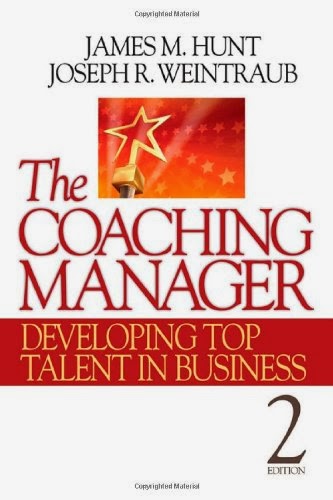
The Coaching Manager: Developing Top Talent in Business, 2nd Edition, James M. Hunt

http://www.amazon.com/gp/product/1412977762/ref=as_li_ss_tl?ie=UTF8&camp=1789&creative=390957&creativeASIN=1412977762&linkCode=as2&tag=freemanagementzon-20


The Second Edition presents a developmental coaching methodology that managers can use to guide employees to achieve higher levels of skill, experience greater engagement with organizations, and promote personal development. Clearly written, without jargon, specific coaching techniques are illustrated through short case studies and self-assessment exercises that help readers apply the principles in their own lives. A coaching model solidly grounded in adult learning theory helps readers reflect on their strengths and weaknesses. This edition has new features including real-world examples and cases that demonstrate how developmental coaching can be integrated with goal setting.

Review
“The Coaching Manager is a timely and valuable resource for leaders interested in fostering a culture of coaching in contemporary organizations. Evidence-based strategies and real-world exemplars are provided for cultivating talent today and inspiring success for the future.” (Patricia A. Hickey, PhD, MBA, RN, FAAN, 2010-03-19)

"The second edition takes into account the new challenges and opportunities posed by an increasingly global workforce, new technology, and a persistent and rapid pace of change. The authors have, once again, provided an excellent handbook for any manager who wants to be an effective coach, and any individual who wants to leverage the potential of coaching in varied and commonly encountered situations at work." (Kathy E. Kram, PhD 2010-03-19)

"A practical introductory text in developing coaching managers."

From the Inside Flap
"The Coaching Manager provides real-world strategies for developing people in any organization. Hunt and Weintraub bring together a new model of coaching along with a solid understanding of how business works. A must read for leaders at all levels."

--Roger Enrico, former Chairman and CEO of PepsiCo Inc. --This text refers to the Hardcover edition.

About the Author
Dr. James M. Hunt is Assistant Professor of Management and the Charles E. McCarthy Family Trust Term Chair, at Babson College in Wellesley, Massachusetts. He teaches management, strategic human resource management and leadership. James is also a faculty member of the Leadership and Influence Program at Babson's School of Executive Education. Previously, James served on the faculty of Clark University’s Graduate School of Management.

James is a Faculty Co-Director of the Coaching for Leadership at Babson. The Babson Coaching Program provides developmental coaching for Babson Students working toward enhancing their competencies in leadership and teamwork. Each year, the faculty train over five hundred Babson Alumni and MBA students in coaching techniques and development planning. His recent paper on coaching (with Dr. Joseph Weintraub) was awarded the "Best Management Development Paper" by the Academy of Management, the largest professional association of business school professors in the world.

James is also a founder of Hunt Associates, a career and leadership development firm that provides executive coaching, career counseling, employee assistance programs and strategic human resource consulting. (www.HuntAssociates.com) Since 1990, Hunt Associates has worked with companies such as the Bose Corporation, 3Com, Genzyme, and Stratus Computer.

James graduated from the Massachusetts Institute of Technology with a B. Sc. Degree and received the doctorate in business administration from Boston University’s Graduate School of Management, where he studied career and leadership development and work/life balance.

Dr. Joseph R. Weintraub is Faculty Co-Director of the Coaching for Leadership Program at Babson College where he is also an Associate Professor of Management and Organizational Behavior. At Babson, he developed the Human Resource Management and Leadership Courses in both the undergraduate and graduate programs in business. He is also President and Founder of Organizational Dimensions, a human resources consulting firm based in Wellesley, Massachusetts.

Dr. Weintraub’s work has appeared in many publications including Fortune, Entrepreneur, The Wall Street Journal, and the New York Times. He has also appeared on several syndicated television programs such as Evening Magazine and The Bottom Line. His recent paper on coaching (with Dr. James Hunt) was awarded the "Best Management Development Paper" by the Academy of Management, the largest professional association of business school professors in the world. He is also one of the developers of Star-Teams Insights ™ a web-based assessment report providing developmental feedback on leadership, teamwork and work style.

Dr. Weintraub has worked with many organizations including Fidelity Investments, Dunkin’ Donuts, Bose, AT&T, Duke Energy and the Los Angeles Dodgers. Much of his recent activity has been focused in the areas of leadership and coaching. He is currently working with companies in both Japan and the U.S. to combine the teaching of leadership, coaching, and teamwork with the playing of baseball.

Dr. Weintraub received his B.S. degree from the University of Pittsburgh and both his M.A. and Ph.D. degrees in Industrial-Organizational Psychology from Bowling Green State University. He is also the past president of the Human Resources Council, a Boston-based HR professional association.

Product Details :
  • Paperback: 328 pages
  • Publisher: SAGE Publications, Inc; Second Edition edition (May 6, 2010)
  • Language: English
  • ISBN-10: 1412977762
  • ISBN-13: 978-1412977760
  • Product Dimensions: 0.6 x 6 x 8.8 inches

More Details about The Coaching Manager: Developing Top Talent in Business, 2nd Edition

Managerial Economics: Theory, Applications, and Cases, 8th Edition, W. Bruce Allen

http://www.amazon.com/gp/product/0393124495/ref=as_li_ss_tl?ie=UTF8&camp=1789&creative=390957&creativeASIN=0393124495&linkCode=as2&tag=freemanagementzon-20


Thoroughly updated to reflect the post-crisis, global, and digital economy. Modernized for the 21st century, the Eighth Edition emphasizes strategic thinking by managers and includes over 50 new case studies on events from 2010 to 2012 that prepare students for today’s changing economy.

About the Author
W. Bruce Allen (Ph.D., Economics, Northwestern University) is Professor of Business and Public Policy at the Wharton School of Business, the University of Pennsylvania. For many years he was the Vice Dean and Director of the Wharton Graduate Division. He is an internationally recognized expert in transportation economics, and he specializes in demand theory and logistics. In addition to his duties at Wharton, Professor Allen teaches each summer in India and consults for numerous companies domestically and abroad. He has won a number of teaching awards, including the coveted Anvil Award, the highest teaching honor at Wharton since it is voted on by the students.

Keith Weigelt (Ph.D., Economics, Northwestern University) is the Rebecca and Morris Marks Professor of Management at the Wharton School of Business, the University of Pennsylvania. He is an internationally recognized expert in business strategy, game theory, and tournaments, with articles published in the following leading journals: Journal of Political Economy, Econometrica, American Economic Review, Quarterly Journal of Economics, Journal of Business, and Management Science. Professor Weigelt has won numerous teaching awards, most recently the Undergraduate Division Excellence in Teaching Award and the “Tough, but I will thank you in 5 years” Award.

Neil A. Doherty (Ph.D. Cranfield Institute) is the Frederick H. Ecker Professor of Insurance and Risk Management at the Wharton School of Business, the University of Pennsylvania. He is an internationally recognized expert in corporate risk management, and is the author of Integrated Risk Management (McGraw-Hill, 2000). Professor Doherty has also won numerous teaching awards.

The late Edwin Mansfield was for many years a distinguished professor of economics at the University of Pennsylvania. He was an internationally recognized expert in the economics of technology and industrial organization. His numerous texts, all published by W.W. Norton, have sold millions of copies around the world. In 1979, when Sino-American scientific agreements were finally reached, Mansfield was the first American economist to lecture in the People's Republic of China.

If your looking for an applied managerial economics text this really isn't it. It is solid in it's theory presentation and cases, but the applications are mostly theoretical, not applied. This isn't a book you will keep around for reference.

Product Details :
  • Paperback: 736 pages
  • Publisher: W. W. Norton & Company; Eighth Edition edition (September 15, 2012)
  • Language: English
  • ISBN-10: 0393124495
  • ISBN-13: 978-0393124491
  • Product Dimensions: 1.3 x 7.4 x 9 inches

More Details about Managerial Economics: Theory, Applications, and Cases, 8th Edition

Wednesday, December 18, 2013

Liquid Lean: Developing Lean Culture in the Process Industries, 1st Edition, Raymond C. Floyd

http://www.amazon.com/gp/product/1420088629/ref=as_li_ss_tl?ie=UTF8&camp=1789&creative=390957&creativeASIN=1420088629&linkCode=as2&tag=freemanagementzon-20


From 20 years experience leading lean at Exxon as well as having led large scale breakthrough improvements in the tar sand to oil conversion process in beautiful Canada,Raymond Floyd clearly articulates many concepts and lessons learned. The book is structured following the Shingo Prize model evaluation criteria categories of:

1) business results
2) consistent lean enterprise culture
3) continuous process improvement
4) cultural enablers

His original thinking around material transformations (as opposed to assembly/filling) and the recognition of the "time independent" nature of many chemical/fermenation/ processes is refreshing and spot on. The many examples generously sprinkled throughout the book make reading it a practical exercise.

The section on the inherent inflexibility of "Liquid Lean" processes caused by the chemical nature of the production transformation includes the brilliant example of the New York Subway System.

The special importance of the role of Statistical Process Control (SPC) or Lean Six Sigma in improving Liquid Lean environments is also covered in simple, yet thorough detail.

The unique people challenges in processes with many pipes and tanks, as well as the leadership challenge in such an environment is treated as the last, but not least valuable section.

I found this a very useful summary of key lean concepts applied to a process industry There are some significant differences compared to the traditional manufacturing scenarios The author obviously has had many years of successful experience which I could relate with . A great resource to have in your bookcase and to share with others

Victor Caune OE/CI Manager Fonterra Echuca Aus

I have used the information in this book to help drive Lean at my site. Mr. Floyd does a great job of explaining how to use the Lean tools in the continuous process flow industry. This is an excellent book for managment to learn how to identify waste and improve processes by working smarter not harder.

It is a great book tying lean to continuous process industries. For those of us Lean Practitioners it makes our jobs a lot easier as we can communicate to our clients in terms we and they understand. There are some wonderful examples of applying lean. One down side is the book is in need of a good editor and I have had a red pen out since I started making changes to the writing.

Gregg Messel

Product Details :
  • Hardcover: 346 pages
  • Publisher: Productivity Press; 1 edition (February 24, 2010)
  • Language: English
  • ISBN-10: 1420088629
  • ISBN-13: 978-1420088625
  • Product Dimensions: 0.9 x 6.5 x 9.6 inches

More Details about Liquid Lean: Developing Lean Culture in the Process Industries

Tuesday, December 17, 2013

Pricing Strategy: Setting Price Levels, Managing Price Discounts and Establishing Price Structures, 1st Edition, Tim J. Smith

http://www.amazon.com/gp/product/0538480882/ref=as_li_ss_tl?ie=UTF8&camp=1789&creative=390957&creativeASIN=0538480882&linkCode=as2&tag=freemanagementzon-20


Learn how to make pricing decisions that will maximize a firm's profits by creating and capturing customers with PRICING STRATEGY: SETTING PRICE LEVELS, MANAGING PRICE DISCOUNTS AND ESTABLISHING PRICE STRUCTURES. Written by recognized pricing thought leader and principal of a successful pricing firm, Tim J. Smith, this comprehensive book emphasizes the stakeholder's importance in making decisions, while highlighting key trade-offs to consider when choosing between opposing outcomes. In this book's balanced presentation of quantitative instruction and qualitative concepts, learn more about the influences that should guide your decision making.

Review
"The book is the most comprehensive pricing strategy book currently available on the market. It explains conceptual pricing topics that can be readily understood and applied by managers setting and managing price." --Steve Shook, University of Idaho

"The book not only covers the various aspects of strategic pricing, it also provides the necessary quantitative tools to determine the price levels. This book overcomes one of the key weaknesses of its competitor, Nagle and Holden's Strategy and Tactics of Pricing, i.e., not enough tools to arrive at prices." -- Praveen Kopalle, Tuck School of Business, Dartmouth College

About the Author
Well-known in the industry as a thought leader in pricing, Dr. Tim Smith is Managing Principal of Wiglaf Pricing as well as Adjunct Professor of Marketing at DePaul University. Dr. Smith is a researcher, an instructor, and a consultant in pricing strategy. He is a regular presenter at THE Professional Pricing Society conferences, in both the United States and Europe. With hard-hitting, focused messages for executives, he regularly presents actions that lead to dynamic results. At Wiglaf Pricing, Dr. Smith provides strategic pricing support for globally leading firms such as Symantec, as well as a host of entrepreneurial firms and portfolio companies of private capital. Dr. Smith has developed his insights into pricing through past roles, including Chief Marketing Officer of ISB Development, a software subsidiary of Nonolet in Novosibirsk, Russia, and Business Development Manager of SPL WorldGroup, a software product and consulting firm. Dr. Smith began his career as a research scientist in quantum mechanics before his interest in strategy prompted him to pursue an MBA. His focus on pricing is a natural culmination of his deep love of math and his market orientation. Dr. Smith holds an MBA with High Honors in Strategy and Marketing from the University of Chicago GSB, a PhD in Physical Chemistry from the University of Chicago, a BS in Chemistry and Physics, and BA in Mathematics from Southern Methodist University. In addition to this text, he has authored another book on systematically growing revenue in business.

I first purchased this book about a year ago as I was beginning to re-engage in a B2B industry I had previously spent 20+ years in. Strategy is always an interesting topic, and inquisitive by nature I have always been intrigued by why firms, mine and others took the pricing actions that they did, so I bought the "textbook". Although as a textbook it is complete with exercises at the end of each chapter (and answer sets which are not available -ug), it is written at a level and with a style which makes it easily readable.

The understanding of pricing strategies gained from reading this book, along with following the author Tim Smith through his work at his consulting company Wiglaf Pricing and their [...] has allowed me to reexamine my industry with renewed insight, and identify a path forward which is more explainable, well reasoned and sucessfully sustainable.

I consider Pricing Strategy to be a must read for anyone serious about understanding the pricing side of a business. I highly recommend Pricing Strategy without reservation.

While I am somewhat biased as an associate of Tim Smith but this presentation is the best I have ever seen on the subject of strategic pricing. I have been teaching marketing as an adjunct professor in Chicago for 28 years and pricing is an integral part of my teaching curricula. This book takes the art and science of pricing and setting prices to an entire new level. It offers excellent perspective in pricing and theory and practice and offers the most complete presentation of pricing that I have ever seen.

Product Details :
  • Hardcover: 344 pages
  • Publisher: Cengage Learning; 1 edition (January 18, 2011)
  • Language: English
  • ISBN-10: 0538480882
  • ISBN-13: 978-0538480888
  • Product Dimensions: 0.7 x 7.9 x 10 inches

More Details about Pricing Strategy: Setting Price Levels, Managing Price Discounts and Establishing Price Structures, 1st Edition

Monday, December 16, 2013

Writing Effective Policies and Procedures: A Step-By-Step Resource for Clear Communication, 1st Edition, Nancy J. Campbell

http://www.amazon.com/gp/product/081447960X/ref=as_li_ss_tl?ie=UTF8&camp=1789&creative=390957&creativeASIN=081447960X&linkCode=as2&tag=freemanagementzon-20


Book Description
"Policies and procedures -- they're what make a company run efficiently and legally. Now managers have a definitive guide to creating accurate policies and procedures documents. The book is useful for professionals in such areas as:

* health and safety * human resources * office management * administration * quality
* manufacturing * customer service * finance and accounting.

Readers will enjoy the unusually friendly, informal approach of this book. Loaded with examples, checklists, guidelines, quick tips, work plans, and forms, it is ready for immediate use. The book shows how to:

* write (and design) documents clearly (so employees will understand and follow the policies)
* plan, analyze, and research each element
* help employees increase efficiency, reduce mistakes and frustration, and save time and money -- by providing clear guidelines to follow
* avoid legal mistakes that can get a company in trouble."

About the Author
NANCY J. CAMPBELL (Kansas City, MO) is a trainer, facilitator, and speaker specializing in the development of management skills to enhance employee performance.

The book is easy to read and understand. It provides helpful guidelines and background material to design procedures. It works a bit as a checklist, in order to remember all the elements in procedure writting. However, it's not meant for any particular industry, and is very general. I would have liked to find more specific examples, and maybe sections for particular industries.

This book was very helpful in getting started with the procedures that our department so desparately needed. The book didn't mention the computer industry in particular but everything applied. It helped us get the information extracted from the appropriate people, pick a format, plan, and write. The book is easy to read and not dry at all. The 'tools and resources' check lists were great. This book was worth the price tag for me.

Some of the basic writing tips regarding word choice, sentence length, reading level, and formatting are great. The rest might apply if your company has never documented its policies and procedures before or if you work in a static workplace (government office?) where policies or procedures are added or changed only a couple of times a year (do people really still print these on paper?) However, if you work at a dynamic, constantly changing company that must respond to thousands of different customer queries a day, much of the advice is not applicable.

Product Details :
  • Plastic Comb: 412 pages
  • Publisher: AMACOM (January 1, 1998)
  • Language: English
  • ISBN-10: 081447960X
  • ISBN-13: 978-0814479605
  • Product Dimensions: 1.1 x 8.7 x 10.8 inches

More Details about Writing Effective Policies and Procedures: A Step-By-Step Resource for Clear Communication, 1st Edition

Friday, December 13, 2013

Organizational Culture in Action: A Cultural Analysis Workbook, 2nd Edition, Gerald W. Driskill

http://www.amazon.com/gp/product/1412981085/ref=as_li_ss_tl?ie=UTF8&camp=1789&creative=390957&creativeASIN=1412981085&linkCode=as2&tag=freemanagementzon-20


This book is a practical guide to “reading” the culture of organizations and to understanding the implications of culture for organizational effectiveness. Beginning with an explanation of the theories of organizational culture, the book provides guidance on collecting information, leading students through qualitative research methods of observation, interviewing, and analyzing written texts. Students come away equipped to apply cultural insights to fostering diversity, supporting organizational change, making leadership more dynamic, understanding the link between ethics and culture, and achieving personal growth.

Review
"This workbook does a tremendous job of making a lot of complex information easy to understand and apply to real situations." (John Gribas 2010-09-20)

"Excellent and most applicable for any organization going through restructuring." (Kumiko Watanuki 2010-12-07)

About the Author
Dr. Gerald W. Driskill (Ph.D., University of Kansas; M.A., & B.A., Abilene Christian University)is an Associate Professor of Speech Communication at the University of Arkansas at Little Rock. He has taught graduate classes in Organizational Culture and Intercultural Communication since 1993 at UALR. He has taught Managerial Communication in Bangkok, Thailand and has also published a number of organizational communication articles from observation and interview transcript analysis in a multinational firm to analysis of communication patterns in day care cultures. He has served as a President of the local chapter of ASTD (American Society for Training and Development). The workbook grew from his collaboration with Dr. Brenton as he received positive feedback from mid-level managers and others in the ASTD network that used the course material in their own organizations.

Gerald continues to teach in the areas of organizational and intercultural communication. On campus he continues to take a lead role in internationalizing the curriculum. His current participant observer research focuses on communication and unity among religious, non-profit, and government organizations engaged in community building. This research provides a window into issues relevant to leaders creating a culture of community mindedness within their organizations.

Dr. Angela Laird Brenton (Ph.D., University of Kansas M.A., University of Oklahoma, B.S.E. & B.A., Oklahoma Christian University) is Dean of the College of Professional Studies at the University of Arkansas at Little Rock. She has taught graduate classes in Organizational Culture since 1982 at UALR, Pepperdine University, Abilene Christian University, and Southwest Missouri State University. She has published a number of articles using qualitative research methods to study organizational communication--from critical linguistic analysis of organizational texts to analysis of organizational identification. She collaborated on the workbook with Dr. Driskill using materials she has developed over the years of teaching and consulting in the areas of organizational culture.

Angi, with her current administrative duties as dean of an eight-department college, teaches primarily in the area of conflict analysis and mediation and plans future writing projects in that field. She is particularly interested in conflict analysis in religious and non-profit organizations, as well as developing consensus in public policy disputes. She has been appointed as a founding faculty member of the Clinton School of Public Service, associated with the Clinton Presidential Library in Little Rock, and is currently developing a course in Communication Process and Conflict Transformation for that innovative master's in public service.

I recieved my book very quickly and in good condition. It is the newest edition and so I did not waste my money buying a product that was out of date.

Product Details :
  • Paperback: 256 pages
  • Publisher: SAGE Publications, Inc; Second Edition edition (September 13, 2010)
  • Language: English
  • ISBN-10: 1412981085
  • ISBN-13: 978-1412981088
  • Product Dimensions: 0.5 x 8.4 x 10.8 inches

More Details about Organizational Culture in Action: A Cultural Analysis Workbook, 2nd Edition

Saturday, December 7, 2013

Great Companies Deserve Great Boards: A CEO's Guide to the Boardroom, 1st Edition, Beverly Behan


Review
“I have attended over 500 board meetings of Fortune 100 companies and I wish I had read this book before I went to the first one! It is excellent.” —Norm Augustine, retired Chairman and CEO, Lockheed Martin

“This book is a must-read for any CEO or board member that wants to create a high-performing board” —Steve Bennett, former CEO, Intuit and board member QUALCOMM, Symantec

“Beverly Behan has made a compelling argument for getting better value from many public companies’ most under-used asset—the board of directors—and has given us an accessible, practical guide to making it happen.” —Nell Minow, Co-Founder, The Corporate Library

“I’ve probably served on more than 50 boards over the last dozen years and was amazed to discover so many ‘new’ ideas in this book. A must-read for directors and perhaps more importantly, new CEOs.” —Frank McKenna, Deputy Chairman, TD Bank Group and former Canadian Ambassador to the United States

“Should be mandatory for C-level executives, a threshold requirement for anyone likely to be elected CEO and a vehicle for all CEOs and directors to study and discuss in order to make the board and themselves more effective.” —Warren Batts, 2006 NACD Director of the Year, retired CEO of four companies, and Adjunct Professor, University of Chicago Business School

“While Great Companies Deserve Great Boards is a useful primer for first-time CEOs and board members, the book also provides helpful reminders for those more experienced in the boardroom.” —Arthur D. Collins, Jr., retired Chairman and CEO, Medtronic, Inc. and board member of three Fortune 500 companies

“A powerful resource for CEOs and board members packed with relevant, real-life examples” —Joe Herring, Chairman and CEO, Covance

“Crisply written and chock-full of insights for CEOs and board members” —Leonard Coleman, former President, National League of Professional Baseball and Presiding Director, Avis-Budget Group

“I highly recommend Great Companies Deserve Great Boards as an excellent read for CEOs, directors and others…Beverly Behan has consulted far and wide in preparing this comprehensive book.” —Frank Brown, Dean, INSEAD

“A well-written book from an author who has grappled with the challenges of the boardroom. Contains penetrating insights into the CEO/Board dynamic; offers clear and refreshingly pragmatic recommendations for more effective boards.” —Gail Cook-Bennett, Chair of the Board, Manulife Financial

“I get a great deal of board practices material from a variety of well-regarded sources and this is the single best piece I have read.” —Wendy Lane, board member, Willis Group, Laboratory Corporation of America, UPM-Kymmene

“Beverly Behan has created an outstanding resource in Great Companies Deserve Great Boards. It’s not enough that boards strive to meet obligations. Every company deserves a great board that adds value to the company and makes the CEO a better leader. Beverly has put her two decades of hands-on board experience to work to do just that.” —Carol Stephenson, Dean, Richard Ivey School of Business and active board member of several Canadian and US boards

“Bev hits the nail on the head! Pragmatic and filled with tactics and approaches that really work” —Don Shippar, Chairman and former CEO, ALLETE, Inc.

“Engaging and thought-provoking from the very outset. Soon I was underlining pages for quick future reference. An insightful and valuable handbook for not only CEOs but for all directors.” —Joel L. Reed, Lead Director, Venoco, Inc

“A must-read for new CEOs and those executive who aspire to be competitive for a CEO assignment” – Mike Bonney, President and CEO, Cubist Pharmaceuticals, Inc.

“How a Board of Directors operates can make or break a CEO. For those CEOs who want to be in the first category, this book is a ‘must-read.’” —James R. Ukropina, former Lead Director of a Fortune 100 company

“Great Companies Deserve Great Boards is a practical primer for CEOs who want to maximize the effectiveness of their boards. Delivers advice on how to transform the corporate board into a significant strategic asset while avoiding the pitfalls that plague so many boards today.” —Susan Ness, former Federal Communications Commissioner and board member.

“Great Companies Deserve Great Boards serves as an indispensable tool and roadmap of the do and don’t in the world of boards. Written in a easy to read 'plane time' format, it provides excellent examples of the author’s teachings and recommendations. The valuable insight gained from this publication are enormously worthwhile for anyone who is on or works with boards.” —Gary D. Cohen, Chief Administrative Officer and Secretary, The Finish Line, Inc.

“Great Companies Deserve Great Boards is a must read for not only CEO’s but all board members and senior executives. Beverly Behan shows that she really gets it when it comes to board operations.” —Tim Marquez, Founder, CEO and Chairman of the Board,Venoco, Inc.

“Bev Behan has provided the definitive guide on how to fully reap the benefits of a Board of Directors and create a brain trust, a partnership, and a winning team for the company and shareholders.” —Leslie Kenne, Lieutenant general (retired) US Air Force, Board Member of both public and not-for-profit companies

"Bev Behan’s extensive experience working with boards and executives is evident in this book. The concepts presented are sound, simple, and essential for successful board operations. As a new CEO and chairman, I found her book to be very helpful and recommend it highly for board members, CEOs, executives, and anyone that deals with corporate governance." —John C. Procario, Chairman, President and CEO, American Transmission Company

"There are a lot of guides for directors on how to do a better job. But Beverly Behan has written an excellent and very practical book for CEOs about how to get the most from their boards." --BNET

About the Author
Beverly Behan has worked with more than 100 Boards of Directors in the United States, Canada and internationally for over a decade—from Fortune 500s to recent IPOs. For the past three years she has been a regular columnist ("The Boardroom") for Bloomberg BusinessWeek.com. She has been quoted as an expert on board effectiveness by nearly every major business publication, including The Wall Street Journal, the Financial Times and Business 2.0 and has been named to the Directorship 100, Directorship Magazine’s list of the 100 most influential people in governance and the boardroom.

Product Details :

  • Hardcover: 192 pages
  • Publisher: Palgrave Macmillan (June 7, 2011)
  • Language: English
  • ISBN-10: 0230113656
  • ISBN-13: 978-0230113657
  • Product Dimensions: 0.9 x 6.3 x 9.8 inches


More Details about Great Companies Deserve Great Boards: A CEO's Guide to the Boardroom, 1st Edition

Friday, December 6, 2013

The Firm of the Future: A Guide for Accountants, Lawyers, and Other Professional Services, 1st Edition, Paul Dunn


Review
For the Back Cover: "In The Firm of the Future, Ron Baker and Paul Dunn create an intellectual challenge for firm leaders. They are truly two of the best critical thinkers today. Together they provide the reader with a wealth of thought-provoking ideas. This is an intellectual masterpiece." —August J. Aquila, Ph.D. Managing Director, American Express Tax and Business Services and Co-Author of CPAs That Sell and CPA Firm Mergers That Work "When I first received my copy of The Firm of the Future I was intimidated by its size and began reviewing the table of contents for the sections that seemed most interesting to me. But, as I am prone to do, I began at the first page. I soon found myself pouring through the book, chapter by chapter. Paul Dunn and Ron Baker have compiled a work that has incredible depth, wisdom, and insight. What I enjoyed most, however, was the conversational tone that makes this book hard to put down. I feel like I have had a personal conversation with wise counselors who understand my business." —Michael C. Knowles, Partner, Frank, Rimerman + Co., LLP, Menlo Park, California

For the Front Matter of the Book: Praise for The Firm of the Future "This is an absolutely must read for any business (and that includes accounting practices) who want to be in business in the future - written in a highly readable style and laced with hundreds of practical 'how to' notes and comments this book is a prerequisite business manual for any practitioner of any professional service organization. This really is a stunning book - I've thoroughly enjoyed the philosophy as well as the practical how to and why and will further refine our approach to the business - loved the style and class of the book." —Peter Byers, Chartered Accountant, New Zealand

"Excited is probably the most appropriate word for how I felt as I read the book. Excited at the learnings, excited at the possibilities that opened before me, excited at what it would be like to work in a practice with no timesheets, value pricing, passionate team members and clients more than delighted with the "concierge service" provided by every team member. Ron Baker and Paul Dunn have clearly described what the firm of the future MUST look like. They clearly debunk all the old theories and practices of managing and operating an accounting firm and clearly explains the methods and FEELINGS that must exist in The Firm of the Future." —Harry Rosenburg, BKR Rosenberg+Partners, Melbourne, Australia

"For many years now, I have utilized and professed within my firm, my working theory, 'Our next new client has to have a thirst for our knowledge and the willingness and ability to pay for it.' The Firm of the Future embraces this theory and provides readers with the sound fundamentals to capitalize on their intellectual, social, and human capital." —Robert A. Gaida, Vice Chairman, BDO Seidman, LLP

"Without doubt the single most important book ever written for professionals. It will force the entire profession to question, rethink, and rework everything it does. It's a book that will change your practice and your life—for the better, forever. Thanks to this book the professions will never be the same again." —Steve Pipe, Founder and Chairman, The Added Value Network (U.K.)

"I have no doubt that the revelations that Paul and Ron draw run a parallel. Sometimes the answer is obvious, but only to those not already under water that if they stood on their toes they could lift their heads above water, and it needs someone from outside the pool to see it. You have done this, you have the answer, and like all brilliant business findings it is simple, it is available to all, and it is practical. It requires only a willingness to accept, to change and to grow - a willingness that some have and some will never have, as like troglodytes they cannot accept change." —Dr Chris White, Doctor of Business Administration, PhD, MBA, B.Bus, ALGA, CA, FCPA, CFP JP, Partner KPMG, Cairns

"For many years Ron Baker and Paul Dunn have been wonderful drivers for change in how professional service firms can become more successful. As a result of their collective wisdom, they have now co-authored a powerful and insightful book that should require many firms to reconsider their strategy. The true benefit of adhering to their New Practice Equation will not only be a more profitable firm but one that will also have a distinct competitive advantage in the marketplace. An absolute required reading for business leaders and managers of professional firms." —Robert J. Gallagher, CPA, President - R. J. Gallagher and Associates, Inc.

"Like everything that challenges conventional thinking, this book takes time to absorb. There were many parts that I just had to 'read-over' so that I could filter through the brilliant combination of evidentiary and emotional interplay that Paul and Ron do so well and reveal the truth for myself. The book reads like the early conversations I was privileged to be privy to, and will be touted through the ages as a seminal work on the new evolution of the profession." —Jason Johnson, CEO, Kipara Consulting

"The Firm of the Future imparts the accumulated wisdom of two key people who are helping to shape the profession, in a readable, and memorable manner. And wisdom a plenty Paul and Ron have to impart. The profession has a vital role to play if our capitalist system is to continue its enormous record of success, and to prove to the doubters that is universally the best system man has invented for improving the well being of all people on earth, not just those in the wealthy developed nations. Paul and Ron chart the course by which the profession can regain its significance and, more importantly, help achieve the bigger goals, both for the benefit of its own members and the wider world. I heartily recommend The Firm of the Future as a 'must have' guide for anyone in practice." —David Hartley, Director, ElanElan Ltd.

"Between the covers of this book are more good ideas than you typically find in a dozen business books. Take notes: you'll want to remember these ideas for a long time." —David Maister, author and consultant

"Paul and Ron have brought together their business philosophies under one cover of a book that should be the practice manual in every professional office. It truly is the answer of having the business do the things the professional used to do in a more effective and profitable manner. Who wouldn't want to work in the firm of the future described here?" —Nicholas Newton CA, CMA, Creative Director, Frouin Group

"Ron Baker and Paul Dunn have put together the modern almanac of best business practices. Their firm of the future focuses on its intellectual, networking, cultural, and customer-focused capital to build wealth. They demonstrate over and over how making meaning, not just money, is the key to a leader's success. The book is an excellent read for those who want to learn the best-of-the-best business practices proven in the past decade." —Sheila Kessler, Ph.D., President of Competitive Edge and author, Measuring and Managing Customer Satisfaction

"The Firm of the Future brings a huge number of great ideas together in one place to provide a road map of what a professional service firm must do to position itself for the future. The book provides key success factors any firm can follow in creating a customer-driven firm." —William Cobb, Cobb Consulting, Houston, Texas

"Finally! A book that catapults professional firms to a more sophisticated, more effective approach to management, leadership, and providing value. Any firm that follows the theory and practical advice advocated by Ron and Paul can retain happy and qualified team members, assure growing and loyal clients, reduce the stress of public practice, and reap the benefits of significant profitability." —Martha Sawyer, president of Hudson Sawyer, publisher of Bowman's Accounting Report

"It's refreshing to see a book that focuses the accounting practice on who we truly are - and more importantly, who we should be. We didn't learn this trade to have our services discounted and be held to a minute-by-minute gauge of value. Ron and Paul keep your focus on the ball rather than the scoreboard and clearly define our role as 'Intellectual Capitalists,' not bean counters!" —Mark J. Koziel, CPA, Director, Dopkins & Company, LLP

"Ron Baker and Paul Dunn have done it again. Living up to their reputation for challenging conventional wisdom, Baker and Dunn present a new paradigm for the professions to understand the dynamic forces at play in the professional practice of the 21st century. The Firm of the Future is a brilliant work that adds a new dimension to the old formula for success in a professional service firm. Baker and Dunn clearly lay out a new road map to help leaders understand the differences between leveraging people and leveraging knowledge; between billing for time and pricing for value; and between doing things right and doing the right things. This new paradigm for the firm of the future will help professionals more accurately plan and structure their firm in a way that acknowledges and capitalizes on today's marketplace, technological opportunities, customer expectations and human capital needs. Any practice leader who wants to ensure success for their organization should be compelled to read The Firm of the Future." —Michael Platt, President & CEO, AccountingWEB

"Sometimes, this book takes your breath away with its ambition. Not content with burying a fundamental paradigm of the professions, it offers a new one that challenges all who think about, and care about, their profession to re-evaluate what they do—and why they do it. Brimming with ideas, Baker and Dunn constantly challenge accepted wisdom, but thankfully provide cogent alternatives for your choice. Quotes, illustrations and examples from all sorts of sources driv...

I first read this book about 2 years ago. I keep it within arm's reach of my desk and refer to it often, still.

I've read one reviewer who stated that this book was the modern almanac of best business practices. I agree completely.

I run my own small law firm. We have implemented many of this book's practices with great success and profitablilty. Primary among them is fixed fee agreements. Yes, we are a law firm that has trashed its time sheets, due in large part to the inspiration and impetus of this book. And, we will never go back.

An earlier reviewer suggested that this book would be more useful for CPA's and not for lawyers. I disagree. Though I'm certain the message of this book is critical for CPA's, I think that any person in law firm leadership must read this book. I think it is particularly suited to small firms and solos who will have the ability to immediately take action in implementing these ideas and making them a reality in their practice.

However, if you are one of my competitors forget everything I said above and do not touch this book. My firm and my family will thank you.

Product Details :

  • Hardcover: 360 pages
  • Publisher: Wiley; 1 edition (April 18, 2003)
  • Language: English
  • ISBN-10: 0471264245
  • ISBN-13: 978-0471264248
  • Product Dimensions: 1.2 x 7.4 x 10.2 inches


More Details about The Firm of the Future: A Guide for Accountants, Lawyers, and Other Professional Services, 1st Edition

Monday, December 2, 2013

Fundamentals of Enterprise Risk Management: How Top Companies Assess Risk, Manage Exposure, and Seize Opportunity, 1st Edition, John J. Hampton


Using examples from companies such as Home Depot, Airbus, Boeing, and Nokia, as well as countries including Taiwan and Russia, "Enterprise Risk Management" takes an in-depth look at one of the hottest topics in business today. This title shows readers in charge of monitoring operational exposures in corporations, nonprofit organizations, and government agencies how they can best determine and balance opportunities against the possibilities of loss. Featuring enlightening case studies, interviews, and exercises, this essential book shows readers how they can implement ERM the right way at their organization.

I purchased this book to gain foundation knowledge in ERM and Corporate Risk Management. My greatest concern with these types of texts is that they provide tons of theory and little practical application. I selected this book because NC State has it as a suggested reading for its ERM Masters courses.

Bottomline, if you are looking for a book to give you the theory and then provide concrete practical application, this is the book you want. If you are looking for a starting point to get your hands around the major topis of ERM, this is the book you want. Basically, the text allowed me to diagram a future state ERM program for my company, and challenge potential consultants to work with us on the implementation project.

Very well written.

Fully managing enterprise risk means more than insuring against fire, floods and other hazards. Companies commonly have many uninsured exposures to loss from tougher competition, rapid technological change, financial instability and regulatory sanctions. That is why business leaders in growing numbers have adopted enterprise risk management (ERM), a flexible way to identify and respond to a corporation's total range of risks. Not all risks are all bad. Some are worth taking. Firms that practice enterprise risk management can minimize their potential peril while taking their best calculated risks, the ones most likely to increase sales and profits. Enterprise risk management will not eliminate risk. It did not prevent the failures of major financial institutions during the 2008 crisis. But author John J. Hampton cogently upholds the practice, noting that a disciplined, detailed approach is critical to making ERM actually work. He favors a customizable model of risk management - including a central monitoring function - that can work for a company of any size. getAbstract recommends this book to business leaders seeking a more reliable way to identify each meaningful risk, to distinguish good risks from bad ones and to cover their downsides as much as possible.

What I really like about this book is the snippets of case studies throughout. Many books talk about what risk managers did wrong, but Hampton talk more about what the risk managers have done right. There are many ways to do something wrong, but not many ways to do something right. This is what tipped the scale for me from 3 stars to 4 stars. What I have also appreciated is that Hampton spent time to write about what the organization should look like to manage risks.

Other than that the book is not contributing much more. It gives average views on the types of risk you could encounter and how to manage a risk database (the Riskonnect tool being developed), with the dependencies between the risks. I feel however that it fell short in the database and dependencies that have been presented. All the risks are treated qualitatively, and as exact/precise figures instead of uncertainties. Also the relationships between the risks are not properly formulated (using formulas or some kind logic such as boolean).

For the case studies alone I would recommend this book, but I would recommend other sources for the risk analysis portions.

Product Details :

  • Hardcover: 320 pages
  • Publisher: AMACOM (August 5, 2009)
  • Language: English
  • ISBN-10: 0814414923
  • ISBN-13: 978-0814414927
  • Product Dimensions: 1.2 x 9.2 x 6 inches


More Details about Fundamentals of Enterprise Risk Management: How Top Companies Assess Risk, Manage Exposure, and Seize Opportunity, 1st Edition

Friday, November 29, 2013

Managing: A Competency-Based Approach, 11th Edition, Don Hellriegel


Maximize your management potential with the unique competency-based approach found only in Hellriegel/Jackson/Slocum's MANAGING: A COMPETENCY-BASED APPROACH, 11e. This unique text blends theory, applications and innovation to prepare you with the skills most critical for management success today. The text's solid presentation of today's management principles and proven, interactive learning features throughout the book focus on six managerial competencies--self-management, strategic action, planning and administration, global awareness, and teamwork.

The authors developed these competencies based on input from hundreds of successful managers in business of all types and sizes to help you streamline your personal managerial development. Fresh examples from well-known organizations, the latest cases, new Ethical Challenges, and experiential exercises demonstration how these competencies are used by real managers to address the challenges of managing and leading their organizations. Integrated Self-Assessments help you analyze and further develop your own management potential for career success as you compare your skills to other students and professionals around the world. Videos showing management in action within recent Hollywood films and an innovative new CengageNOW online learning system to assist you with homework and review all further ensure you develop the strong managerial competencies to lead with confidence.

About the Author
Don Hellriegel is Emeritus Professor of Management in the Mays Business School at Texas A&M University. Dr. Hellriegel joined the faculty at Texas A&M in 1975. He has also taught at the Pennsylvania State University and the University of Colorado. He received his B.S. and M.B.A. from Kent State University and his Ph.D. from the University of Washington. His research interests include organizational behavior, the effects of organizational environments, managerial cognitive styles, and organizational innovation and strategic management processes. His research has been published in a number of leading journals. Dr. Hellriegel served as Vice President and Program Chair of the Academy of Management, President Elect, President, and Past President. He has also served a three-year term as Dean of the Fellows Group of the Academy of Management.

He has also been Editor of the Academy of Management Review and served on the Board of Governors of the Academy of Management. Dr. Hellriegel has performed many other leadership roles, including President, Eastern Academy of Management; Division Chair, Organization and Management Theory Division; President, Brazos County United Way; Co-Consulting Editor, West Series in Management, Head, Department of Management (TAMU); Interim Dean, Executive Associate Dean, Mays School of Business (TAMU); and Interim Executive Vice Chancellor (TAMUS). Dr. Hellriegel has consulted with a variety of groups and organizations, including 3DI, Sun Ship Building, Penn Mutual Life Insurance, Texas A&M University System, Ministry of Industry and Commerce for the nation of Kuwait, Ministry of Agriculture for the Dominican Republic, AACSB, and Texas Innovation Group.

Susan E. Jackson is Distinguished Professor of Human Resource Management in the School of Management and Labor Relations, Rutgers University--New Brunswick, NJ. She received her doctoral degree from the University of California at Berkeley and previously held positions on the faculties of New York University, University of Michigan, and University of Maryland. She is an active member and Past President of the Academy of Management and founder of greeenHRM.org, which is an online resource for students, teachers, and scholars interested in managing human resources in environmentally sustainable organizations.

In addition to green HRM, she is an expert in strategic human resource management and the social dynamics of effective work teams. She has published dozens of articles and book chapters on these and related topics. She is the author or editor of several books, including, Managing Knowledge for Sustainable Competitive Advantage (with Michael Hitt and Angelo DeNisi), Managing Human Resources in Cross-Border Alliances (with Randall Schuler and Yadong Luo), Diversity in Work Teams, and Managing Human Resources in Environmentally Sustainable Organizations (forthcoming, with Deniz Ones and Stephan Dilchert). Professor Jackson also serves as a Book Editor for the Routledge Series in Global Human Resource Management.

John W. Slocum, Jr. is an Emeritus Professor in the Cox School of Business at Southern Methodist University, Dallas, Texas. He has taught at the University of Washington, Penn State, Ohio State, International University of Japan, and the Amos Tuck School of Dartmouth College. Dr. Slocum has been awarded the Alumni Citation for Professional Accomplishment by Westminster College and the Nicolas Salgo, Rotunda, and Executive MBA Outstanding Teaching Awards at SMU. He holds a B.B.A. from Westminster College, a M.B.A. from Kent State, and a Ph.D. in organizational behavior from the University of Washington. He is Past President of the Eastern Academy of Management, the 39th President of the Academy of Management and Editor of the Academy of Management Journal.

He is a Fellow of the Academy of Management, Decision Science Institute, and the Pan-Pacific Institute. He serves as co-editor of the Journal of World Business and the Journal of Leadership and Organizational Studies and Associate Editor of Organizational Dynamics. Dr. Slocum has consulted for organizations including ARAMARK, Baylor Hospital, University of North Texas Health Science Center, LBJ School at the University of Texas, Celanese Chemical Corporation, Pier 1, NASA, and Brakke Consulting. He is a regular speaker for many senior executive development programs, including the University of Oklahoma, Oklahoma State University, SMU, and Lockheed Martin. He is currently on the Board of Directors of ViewCast Corporation, Kisco Senior Living, and GoToLearn.

The authors identify six management competencies and provide an questionnaire that you can complete to measure your own competency as a manager. Examples of these competencies are woven into the fabric of all chapters. End of chapter questions invite the reader to contact various organizations via the Internet to see how they use this competency in the management of their organization. This book is written in a style that is inviting, full of examples, and 'hot' management topics.

I first read "Management" by Hellriegel and Slocum when I was doing my MBA in 1989. Management was one of my favourite subjects then since I needed practical guidance on how to effectively plan, lead, motivate, organise and control my large department in my organisation with large numbers of subordinates under me. I then found the book to be very useful, easy to understand and logical and I used it to achieve excellent results in the subject.

Some few years after graduation, I was back at the university, being a part time lecturer in Management. I again used the book as one of the recommended textbooks. I have since stopped lecturing and still find that the authors have kept the book updated and relevant to the current thinking and practice of management. For students doing an undergraduate course in management, I strongly recommend the book as it is comprehensive, properly structured to introduce the subject and then step-by-step develop it to the end. As a facilitator, I also find the Annotated Instructor's Edition to be very handy as it covers all the topics that are required at undergraduate level and help the instructor prepare and conduct classes. The various "Insights" are very important in highlighting some aspects of the topics. The numerous case studies are also very critical in reinforcing the practical application of the important and interesting subject of management.

Product Details :

  • Hardcover: 704 pages
  • Publisher: Cengage Learning; 11 edition (February 2, 2007)
  • Language: English
  • ISBN-10: 0324421400
  • ISBN-13: 978-0324421408
  • Product Dimensions: 1.1 x 8.6 x 10.8 inches


More Details about Managing: A Competency-Based Approach, 11th Edition

Wednesday, November 27, 2013

Shipping Derivatives and Risk Management, 1st Edition, Amir Alizadeh


A comprehensive book on shipping derivatives and risk management which covers the theoretical and practical aspects of financial risk in shipping. The book provides a thorough overview of the practice of risk management in shipping with the use of theoretical examples and real-life applications.

Review
'A thorough investigation of the fascinating shipping markets by experts in the field. A "must have" for practitioners and researchers in the commodity world.' - Helyette Geman, Director, Commodity Finance Centre, Birkbeck College, University of London and ESCP-EAP 'This is certainly a unique book which combines the theoretical and practical aspects of risk management in shipping. The book provides the readers with essential knowledge of risk assessment in shipping markets and enables them to understand the freight derivatives instruments, their applications, pricing mechanisms and trading strategies. It is a must read for any one involved in the shipping business.' - Mr Knut Moystad, Director of Corporate Development, Imarex 'This useful book combines a practical introduction to risk management techniques with a theoretical exposition for those who want to dig deeper. An excellent choice for anyone wanting to broaden their understanding of freight derivatives.' - Dr Martin Stopford, Managing Director, Clarkson Research Studies

About the Author
AMIR ALIZADEH is a Reader in Shipping Economics and Finance at Cass Business School, City University, London, UK. His research interest includes modelling commodity and shipping freight markets, derivatives and risk management, and forecasting. He has published in several academic journals in the area of transportation, risk management, finance and economics, and has been working as an advisor and a consultant.

NIKOS NOMIKOS is a Reader Lecturer in Shipping Risk Management and Director of the MSc degree in Shipping, Trade and Finance at Cass Business School, London, UK. He holds a BSc in Economics from Athens University of Economics and Business, Greece and an MSc in Shipping Trade & Finance from Cass Business School. After completing his PhD thesis, which examined the effectiveness of risk management techniques for hedging freight rate risk, he commenced working at the Baltic exchange as Senior Market Analyst, being in charge of the freight indices and risk management section.

Since November 2001, he has been with the Faculty of Finance at Cass Business School, where he lectures on Finance, Financial Markets, Futures & Options and Financial Engineering. His current research interests include risk management and risk analysis in shipping, commodity and financial futures markets. His research papers have been published in international finance journals and have been presented in conferences world-wide. He also acts as a consultant on issues of risk management on a number of shipping and financial institutions.

This book provides very good understanding on how to measure and manage freight rate volatility and explore the options available to the shipping professional.

Product Details :

  • Hardcover: 256 pages
  • Publisher: Palgrave Macmillan (May 12, 2009)
  • Language: English
  • ISBN-10: 0230215912
  • ISBN-13: 978-0230215917
  • Product Dimensions: 1.6 x 5.6 x 8.6 inches


More Details about Shipping Derivatives and Risk Management, 1st Edition

Tuesday, November 26, 2013

MP Introduction to Management Science with Student CD and Crystal Ball passcode card (The Mcgraw-Hill/Irwin Series Operations and Decision Sciences), 4th Edition, Frederick Hillier


Introduction to Management Science, 4e, offers a unique model approach and integrates the use of Excel. Through this approach students are better able to grasp the essential concepts covered in the course and see their utility. Each chapter includes a case study that is meant to show the students a real and interesting application of the topics addressed in that chapter. These cases and related applications cut across all functional areas of business and show how management science techniques apply in the business environment.

About the Author
Frederick S. Hillier was born and raised in Aberdeen, Washington, where he was an award winner in statewide high school contents in essay writing, mathematics, debate, and music. As an undergraduate at Stanford University he ranked first in his engineering class of over 300 students. Dr. Hillier's research has extended into a variety of areas, including integer programming, queueing theory and its application, statistical quality control, and the application of operations research to the design of production systems and to capital budgeting.

He was the first prize winner of a research contest on "Capital Budgeting of Interrelated Projects" sponsored by The Institute of Management Sciences and the U.S. Office of Naval Research. He and Dr. Lieberman also received the honorable mention award for the 1995 Lanchester Prize (best English-language publication of any kind in the field of operations research) for the 6th edition of IOR. He currently serves as the Series Editor for the International Series in Operations Research and Management Science being published by Kluwer Academic Publishers.

I am in my second to last week of class and I can't say that I really liked this book. The main problem is that there were too many errors in the book starting with numbers that was misprinted or missing. For a book of this caliber that includes a lot of mathematical calculations, one mistake can make a whole lot of difference. Additionally, I think that the authors could do a better job explaining topics and showing how they arrived at certain answers. The resources disk was a little helpful, but I don't think it was well constructed. The power point slides on the resources could be better constructed to demonstrate how to work the problems in the book, instead of just been pages copied from the text.

This textbook uses CrystalBall and other excel add-ins. The book comes with software license. The book covers topics of optimization, decision tree, and simulation thoroughly.

The book arrived before it was promised and the customer service was greater than I expected. I hope I can find future textbooks with this provider.

The service from the seller was very good and the book is excellent, I can not complaint about anything! The CD's works ok but if you have a MAcBook as I it is a pain to get it to work.

Product Details :

  • Series: The Mcgraw-Hill/Irwin Series Operations and Decision Sciences
  • Hardcover: 629 pages
  • Publisher: McGraw-Hill/Irwin; 4 edition (March 2, 2010)
  • Language: English
  • ISBN-10: 0077400305
  • ISBN-13: 978-0077400309
  • Product Dimensions: 1.3 x 8.7 x 11 inches


More Details about MP Introduction to Management Science with Student CD and Crystal Ball passcode card (The Mcgraw-Hill/Irwin Series Operations and Decision Sciences), 4th Edition

Monday, November 25, 2013

Developing Products in Half the Time: New Rules, New Tools, 2nd Edition, Preston G. Smith


Advance praise for Developing Products in Half the Time Second Edition New Rules, New Tools Preston G. Smith * Donald G. Reinertsen "This is an exceptional book! Get a new highlighter before you start. There are so many 'ah ha's' in each chapter you will never make it through with an old one." Don LaCombe, Ford Motor Company, Product Development Process Leadership "An excellent book with a strong treatment of the cycle-time consequences of overloading your development capacity. It provides powerful and practical concepts for dealing with this issue." Andrew Aquart, Director Product Development, Cordis, a Johnson & Johnson Company "This is practical, useful stuff for people competing in highly competitive fast moving business." Dr. Paul Borrill, Chief Scientist, Sun Microsystems "3M has absorbed many of the tools from the original edition, and this new one will be even more useful.

The topic of incremental innovation is crucial to us, and I really appreciate its balanced treatment." Ronald H. Kubinski, Manager New Product Commercialization Services, 3M Company "As the authors correctly point out, the Fuzzy Front End is the least expensive place to reduce cycle time. This book is one of the only sources of concepts, methods, and metrics for compressing this critical portion of the development process." David M. Lewis, Product Manager, Eastman Kodak Co. "Using these tools we've more than cut our time to market in half. The new edition of this classic crystallizes the synergy of the fast-to-market techniques, and the icons in the margins highlight the opportunities and pitfalls." Mike Brennan , Vice President of Product Development, Black & Decker

This is a treatise on management techniques, not process improvement. The first two chapters detail the decision of which projects to speed up, implying that a manager can only speed up a project by overstaffing it and clearing its path of the usual bureaucracy. Therefore, there is no permanent process gain to be had. But it is a great guide for decision makers looking to cut some time off any (or every) project. The fundamental tenets are these: 1) Make the decision to develop a new product idea quickly.

2) Staff all functions to the project immediately and keep them on throughout (no ramp-up, no handoffs)

3) Specify it simply and quickly and do not change the spec (3 days, 3 pages).

4) Spend a little time on the product architecture, designing for modularity and quick development.

5) User overlapping development techniques (work on multiple modules simultaneously)

6) Make a successful transition to manufacturing to complete the project.

You can halve the development time of most projects just by changing the way you manage your projects, without doing a lot of overtime or increasing the cost of development. Many of the answers are in this book. Again, this is a must read book for all development managers.

I found that this book was packed full of common sense, which is rare in a development management book. Although it has a lot of examples of manufacturing of phsyical goods, I found it great as a software manager. There aren't many spare words in this book, either -- it's terse and well edited, so you get the raw facts and the necessary stories to back them up, but not a lot (or any, really) fluff. I am putting it on my bookshelf for software engineers, right next to Writing Solid Code and Debugging the Development Process, two classics for software engineers and team leads, respectively.

Absolutely the best book there is on the subject of new product development. Of particular import is the discussion on market and pricing dynamics, which may be new to technical-types. Choosing the right product to develop is critical to avoid "The Innovators Dilemma". The book however needs to add more to the discussion of the importance (and risk) of rapid return of (partial) information to the team during the development cycle, as well as human (team) dynamics. I would therefore recommend "The Team Handbook" as a necessary adjunct.

While the first edition was a bit dry to read in the first four chapters, the second edition is more fun. The value of the content has not been reduced with rev 2.0, on the contrary. The book is full of sound business theory which is well explained and put into real life context to help the non-MBA to transfer the message to their respective challenges.

Also invaluable are the hints towards common pitfalls. They show that the authors have really applied the theory and are aware of the human factor in change processes.

I read rev 1.0 and 2.0 and will probably buy 3.0 as well. Keep going!
Product Details :

  • Hardcover: 320 pages
  • Publisher: Wiley; 2 edition (October 10, 1997)
  • Language: English
  • ISBN-10: 0471292524
  • ISBN-13: 978-0471292524
  • Product Dimensions: 1.1 x 6.4 x 9.2 inches


More Details about Developing Products in Half the Time: New Rules, New Tools, 2nd Edition

Sunday, November 24, 2013

High Commitment High Performance: How to Build A Resilient Organization for Sustained Advantage, 1st Edition, Michael Beer


"In these economic times this book is more important than ever. A must-read for the leaders of today and tomorrow." Douglas R. Conant, president and chief executive officer, Campbell Soup Company

Praise for High Commitment, High Performance

"It is seldom that I read a book about leadership and get excited; this one did that to me. The author has found values and aspects of leadership that have worked well for long term execution of strategies. For Boards and CEOs, this is a great book." —Leif Johansson, president and chief executive officer, Volvo Group

"Resilience promises to be the distinguishing characteristic of companies that will prosper from the current economic crisis. Mike Beer's new book is a compelling manual for success in this new economy." —Ravi Venkatesan, chairman, Microsoft India

"A must read for leaders who want to develop an edge by building a resilient organization for competitive advantage. Beer's views and recommendations are based on extensive research." —Ram Charan, Ram Charan Associates and co-author of the bestselling book, Execution: The Discipline of Getting Things Done

"With decades of teaching and research and close engagement with companies, Michael Beer has written a book that not only makes the case for building a high commitment organization, but also provides practical advice for doing it." —Jeffrey Pfeffer, professor, Stanford Business School and author, The Human Equation: Building Profits by Putting People First

"Beer brings a multi-disciplinary perspective from his extensive experience in industry and academia to reveal how leaders of HCHP organizations break through internal barriers and manage multiple tensions in their quest for sustainable value-creation." —Robert Kaplan, professor, Harvard Business School and co-author, The Execution Premium and The Balanced Score Card

"Mike Beer brings his wealth of research and experience to provide fresh insights to the enduring question of what makes companies succeed over the long run. I have utilized many of the principles successfully and recommend them to any corporate leader committed to building an outstanding organization." —Ed Ludwig, chairman and chief executive officer, Becton Dickinson

Now more than ever before, individuals as well as organizations must be resilient so that they can adapt effectively to changes, especially to those that occur unexpectedly. Achieving a competitive advantage is nowhere near as difficult as sustaining one. Therein is a paradox that serves as the title of Marshall Goldsmith's book: what got you here won't get you there. Even more ominous, what got you here won't keep you here. Hence the appropriateness of the subtitle selected for Beer's book. What he shares is an abundance of observations, questions, issues, suggestions, and recommendations that are anchored in more than 40 years of real-world experience. In the Introduction, he refers to his quest to study and build high commitment, high performance (HCHP) organizations. What he provides is what he has learned about what works, what doesn't, and the reasons why.

Written in collaboration with Russell Eisenstat and Nathaniel Foote, this volume provides a number of different perspectives and knowledge concerning several key disciplines that include strategic management, organization design, human resource management, culture and organization development, enterprise learning, and change initiatives. "Employing these diverse perspectives, I propose three paradoxical organizational outcomes needed to achieve sustained high performance [i.e. performance alignment, psychological alignment, and the capacity for learning and change], articulate five management levers for designing an organization to achieve these outcomes [i.e. leadership at all levels and in all areas, an effective learning and governance system, a strategic performance management system, an organizing system, and an HR system], and present a framework for change and its transformation."

Here's a key point: Obviously, there must be both high commitment at the senior executive level. Much more importantly, C-level executives and other supervisors must demonstrate - not only affirm -- high performance. Otherwise, they cannot expect those for whom they are responsible to do so and their organization will not survive in its competitive marketplace, much less dominate it. Moreover, as Beer explains in the Epilogue, "CEOs and their top teams will have to engage their hands to design very different management practices, particularly with regard to the firm's performance management and compensation systems. The former must enable hard-hitting, fact-based reviews of the business to achieve essential shirt-term profits in a way that does not compromise the firm's larger purpose and its long-term performance. With regard to the latter, surely a shift away from incentives for annual profits to incentives tied to long-term performance (five to seven years) is in order."

As Beer duly acknowledges, it is by means easy for CEOs, their senior teams, and boards of directors to build a HCHP organization. Once having done so, it is even more difficult to ensure that it continues to be one. Nonetheless, it can be done and - in my opinion - MUST be done. Here in a single source, Beer provides about as much information and advice as any business leader or team must have to achieve these separate but related objectives. There is much to learn from the core policies and best practices of HCHP companies. Also, CEOs and their top teams must "engage their hearts as well as their minds to redefine their to redefine their and their firm's purpose [and] define a distinctive strategy that leverages the firm's human assets and unique capabilities." Of course, this will require extraordinary leadership at all levels and in all areas of a firm's operations. To those who read Michael Beer's brilliant book, I now presume to ask, "If not now, when? And If not you, who?"

Those who share my high regard for this volume are urged to check out Jeanne W. Ross, Peter Weill, and David Robertson's Enterprise Architecture as Strategy: Creating a Foundation for Business Execution. Dean R. Spitzer's Transforming Performance Measurement: Rethinking the Way We Measure and Drive Organizational Success, and Guy Kawasaki's Reality Check: The Irreverent Guide to Outsmarting, Outmanaging, and Outmarketing Your Competition.

Product Details :

  • Hardcover: 416 pages
  • Publisher: Jossey-Bass; 1 edition (August 10, 2009)
  • Language: English
  • ISBN-10: 0787972282
  • ISBN-13: 978-0787972288
  • Product Dimensions: 1.4 x 7.1 x 9.4 inches


More Details about High Commitment High Performance: How to Build A Resilient Organization for Sustained Advantage, 1st Edition